
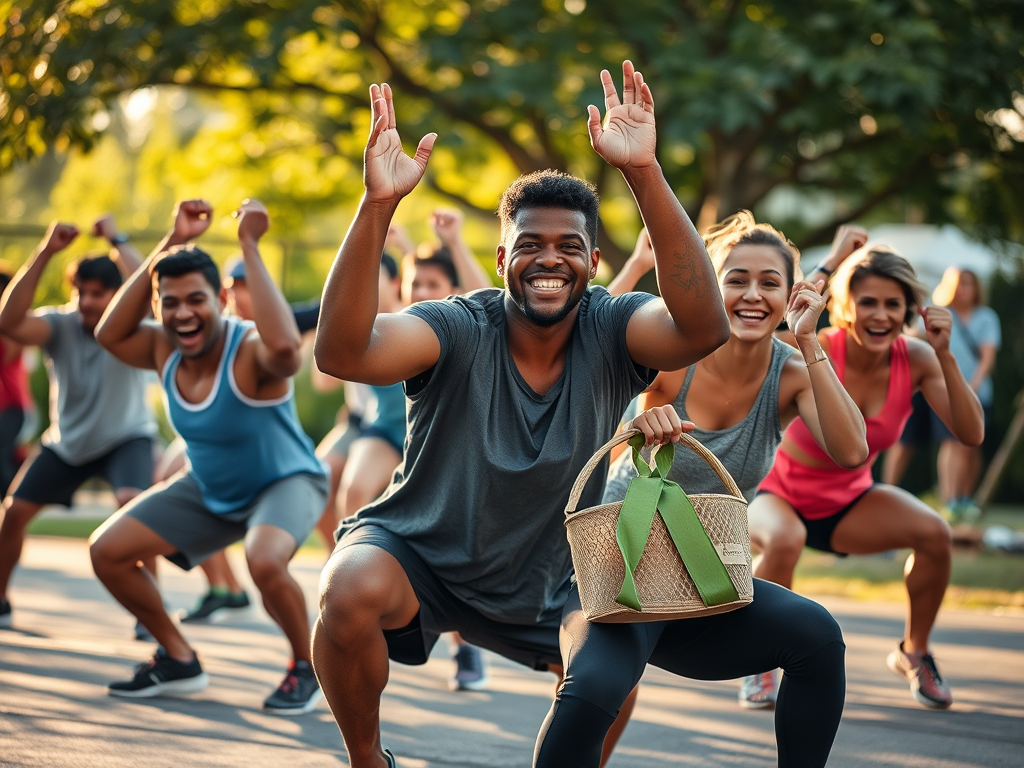
For years, fitness has been marketed around aesthetics—bigger muscles, leaner bodies, and dramatic physical transformations. While looking good can be motivating, it is not the primary purpose of movement. The true goal of training is to function better in everyday life.
Functional fitness focuses on preparing your body for real-world demands: lifting groceries, climbing stairs, carrying children, maintaining balance, preventing injuries, and staying independent as you age. It bridges the gap between gym performance and daily living.
This article explains functional fitness in a practical, no-nonsense way, showing how to train for strength, mobility, coordination, and resilience—not just gym numbers. It is a core satellite article within the pillar guide Health and Fitness: The Complete Guide to Building a Healthy Body and an Active Life.
What Is Functional Fitness?
Functional fitness is a training approach that emphasizes movements rather than muscles. Instead of isolating single muscle groups, functional training uses compound, multi-joint movements that reflect how the body naturally moves.
Functional exercises typically involve:
- Multiple joints working together
- Core engagement
- Balance and coordination
- Movement across different planes
Examples of functional movements include:
- Squatting and standing
- Hinghing and lifting
- Pushing and pulling
- Carrying and rotating
The goal is not to perform exercises perfectly in a controlled gym environment, but to build transferable strength.
Functional Fitness vs Traditional Training
Traditional gym training often focuses on aesthetics and muscle isolation. Functional fitness focuses on performance and longevity.
Key differences:
- Isolation vs integration
- Machines vs free movement
- Appearance vs capability
This does not mean traditional strength training is useless. In fact, the most effective programs combine both.
Functional fitness enhances how strength is applied in real life.
Why Functional Fitness Matters More as You Age
As we age, the risks of falls, joint stiffness, and loss of mobility increase. Functional fitness directly addresses these risks.
Benefits include:
- Improved balance and coordination
- Stronger stabilizing muscles
- Better joint health
- Reduced injury risk
- Greater independence
Training functionally is one of the most effective ways to age well, not just age longer.
The Core Movement Patterns of Functional Fitness
Nearly all functional exercises fall into a few fundamental patterns.
1. Squat Pattern
Used in:
- Sitting and standing
- Picking objects up from the ground
Examples:
- Bodyweight squats
- Goblet squats
- Sit-to-stand drills
2. Hinge Pattern
Used in:
- Lifting objects
- Protecting the lower back
Examples:
- Deadlifts
- Hip hinges
- Kettlebell swings
3. Push Pattern
Used in:
- Pushing doors
- Getting up from the floor
Examples:
- Push-ups
- Overhead presses
- Bench press variations
4. Pull Pattern
Used in:
- Pulling objects toward you
- Posture maintenance
Examples:
- Rows
- Pull-ups
- Resistance band pulls
5. Carry and Locomotion
Used in:
- Carrying groceries
- Moving objects
Examples:
- Farmer’s carries
- Suitcase carries
- Loaded walks
6. Rotation and Anti-Rotation
Used in:
- Twisting movements
- Stabilizing the spine
Examples:
- Cable rotations
- Pallof presses
- Medicine ball throws
Mobility, Stability, and Functional Strength
Functional fitness requires a balance between:
- Mobility: the ability to move freely through ranges of motion
- Stability: the ability to control those movements
Too much mobility without stability increases injury risk. Too much stiffness limits movement quality.
Functional training develops both simultaneously.
Functional Fitness and Injury Prevention
Most injuries occur during everyday activities—not during workouts.
Functional fitness reduces injury risk by:
- Strengthening stabilizing muscles
- Improving movement awareness
- Enhancing joint alignment
- Teaching proper lifting mechanics
This makes functional training particularly valuable for people returning from injury or dealing with chronic pain.
Functional Fitness for Busy People
Functional training is naturally time-efficient.
Why it works for busy schedules:
- Fewer exercises per session
- Full-body engagement
- Minimal equipment required
- Shorter workouts with high return
A 30–45 minute functional workout can deliver strength, cardio, and mobility benefits simultaneously.
Functional Fitness and Cardio Conditioning
Functional training often elevates heart rate naturally.
Examples include:
- Circuits
- Carries
- Dynamic movement flows
This makes functional fitness a powerful bridge between strength training and cardio, especially for people who dislike traditional cardio.
Equipment for Functional Fitness
You do not need expensive machines.
Effective tools include:
- Bodyweight
- Kettlebells
- Dumbbells
- Resistance bands
- Medicine balls
The focus is on how you move, not what you use.
Common Functional Fitness Mistakes
- Confusing chaos with functionality
- Using unstable surfaces unnecessarily
- Sacrificing technique for intensity
- Ignoring progressive overload
Functional training should be challenging—but controlled.
How to Integrate Functional Fitness Into Your Routine
You do not need to abandon traditional training.
Effective integration strategies:
- Begin sessions with functional warm-ups
- Use compound lifts as the foundation
- Add carries and rotation work
- Replace some machine work with free movement
The goal is balance—not extremes.
Functional Fitness and Longevity
People who train functionally often experience:
- Better posture
- Fewer aches and pains
- Greater confidence in movement
- Improved quality of life
Functional fitness supports the ability to live independently and actively for decades.
Final Thoughts
Functional fitness is not a trend—it is a return to purpose-driven training.
Training should prepare you for life, not just the gym floor.
By focusing on movement quality, strength, balance, and resilience, functional fitness helps you build a body that performs well today—and continues to serve you in the future.
Train for life. The aesthetics will follow.
1 thought on “Functional Fitness: Training for Real Life, Not Just the Gym”